

How developers can turn beauty, performance and place into buyer confidence in a more cautious housing market.
For years, residential development has leaned heavily on the power of the finished object: the CGI, the show home, the kitchen island, the view, the lifestyle photography, the brochure line about “contemporary living”. But in 2026, the buyer is not simply asking whether the home looks good.
They are asking whether the decision feels safe.
That shift matters. Because in a more cautious market, beauty still attracts attention, but confidence converts it. The new battleground for developers is not just aesthetic desire. It is trust: trust in the running costs, the future value, the location, the build quality, the lifestyle fit, and the long-term logic of buying the home in the first place.
Zoopla’s May 2026 House Price Index captured this tension clearly. Buyer demand was running 10% below the previous year, yet sales agreed were still 1% higher, suggesting that the casual browser has pulled back while committed movers continue to transact. Zoopla also noted that mortgage rates had moved from around 4% at the start of the year to 5% in April, sharpening buyer caution.
This does not mean the buyer has disappeared. It means the buyer has become harder to convince.
The buyer has not disappeared. They have become harder to convince.
The housing market is not frozen. It is filtering.
The people still moving are not drifting into decisions. They are scrutinising them. They are weighing trade-offs more intensely, comparing options more carefully and asking whether a property genuinely justifies the financial commitment it demands.
Reuters reported in June 2026 that analysts had cut their UK house price growth forecast for the year to 1.8%, down from a 2.5% forecast three months earlier, with higher borrowing costs and affordability pressure limiting purchasing power. The same Reuters poll identified high deposits, elevated mortgage rates and inflated house prices as the main constraints facing first-time buyers.
For developers, that changes the job of sales and marketing.
A buyer under pressure does not just need to be inspired. They need to be reassured. They need a stronger reason to believe that this home, this development and this location are worth choosing now.
The most dangerous assumption developers can make is that a high-quality home will automatically communicate its own value. In a cautious market, quality needs to be translated. The buyer needs to understand not just what has been built, but why it matters to them.

Affordability has shifted the emotional threshold for purchase.
Affordability is usually treated as a financial issue. But it is also an emotional one.
When borrowing costs rise, deposits stretch and price growth looks less certain, the emotional threshold for purchase becomes much higher. Buyers are not only calculating monthly payments. They are calculating regret. They are asking themselves: what if this is the wrong time, wrong location, wrong property, wrong layout, wrong lifestyle, wrong long-term move?
That is the confidence gap.
And it is especially important for new-build developers because new homes often ask buyers to make decisions before the full lived experience is visible. Buyers may be buying off-plan, buying before landscaping matures, buying into an emerging community, or buying from a set of visuals and promises rather than a fully inhabited place.
That requires more than marketing polish. It requires decision support.
Developers need to reduce perceived risk across every part of the buyer journey.
What will this home cost to run?
How does the layout support everyday life?
What makes the location work beyond a postcode description?
How will the home adapt as needs change?
What is the evidence that this builder delivers well?
Why is this development a strong lifestyle and financial decision compared with the alternatives?
The buyer is no longer just buying the home. They are buying the logic of the decision.
Confidence is built through evidence, not aesthetics alone.
There is a misconception in property marketing that reassurance means adding more adjectives: premium, elegant, spacious, considered, desirable, exclusive.
But buyers do not build confidence through adjectives. They build confidence through proof.
That proof can be practical, emotional and commercial. It can include energy performance, running cost comparisons, buyer satisfaction data, local amenity mapping, layout logic, storage explanations, materials rationale, warranty clarity, build-progress storytelling, and evidence of how the home supports real life rather than brochure life.
Energy efficiency is a good example. HBF and Octopus Energy’s 2026 Watt a Save work reported that new-build homes save households an average of £420 a year on energy bills compared with older properties, making them around 21% cheaper to run. The same HBF summary stated that many energy-efficiency features, such as heat pumps, solar panels and EV charging points, can add up to £6,000 to the value of a home, while upgrading an older property to new-build standards could cost between £23,100 and £83,000.
That is not a side detail. That is buyer confidence material.
Nationwide’s analysis also suggests that energy performance is beginning to carry value signals, with A or B rated owner-occupier homes attracting a 1.7% premium compared with similar D-rated homes, while F or G rated homes attract a 3.5% discount. Nationwide is careful to describe the current effect as modest, but also notes that the value attached to energy efficiency is likely to change over time as policy and incentives evolve.
The direction of travel is clear. Running costs, energy resilience and future-proofing are moving from technical specifications into buyer psychology.
The government’s Warm Homes Plan reinforces that wider shift. Published in 2026, it sets out £15 billion of public investment to upgrade up to five million homes by 2030, with grants, loans and new standards intended to reduce bills and improve energy performance. It also explicitly frames future homes around solar panels, high energy efficiency and clean heating as standard.
For developers, the implication is simple: the specification sheet is no longer enough. The value of performance needs to be made visible, legible and emotionally relevant.
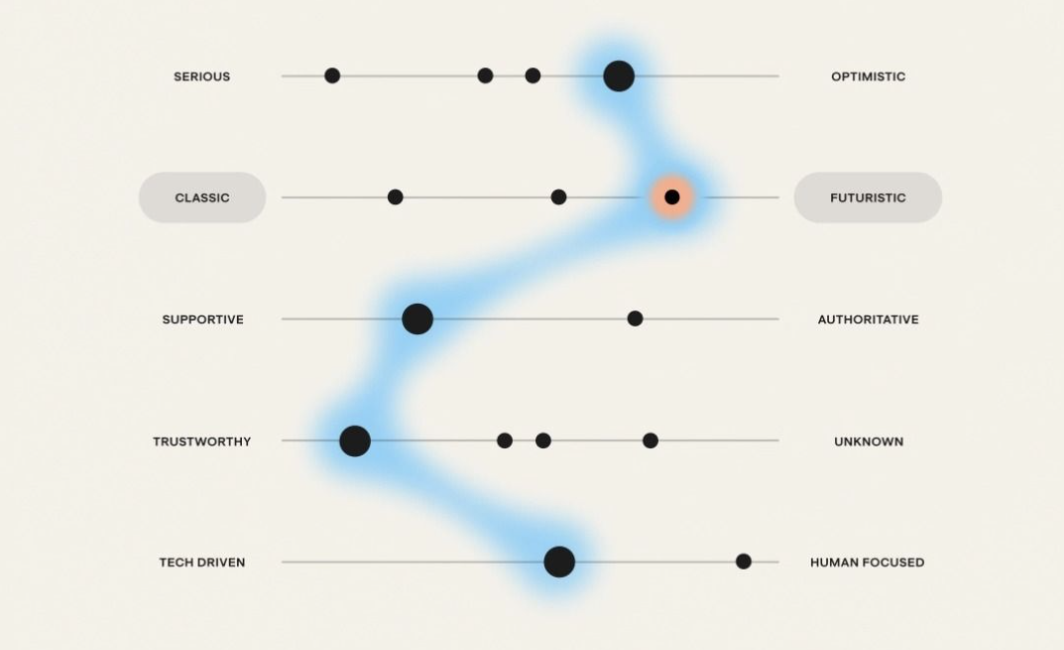
Trust can be built, but it has to be designed into the journey.
The new-build sector already has evidence that trust can be earned when the experience works.
The Home Builders Federation’s 2026 National New Homes Customer Satisfaction Survey reported that 93% of new-build buyers would recommend their builder to a friend. The survey also found that 90% of buyers were satisfied with the quality of their home, 90% were satisfied with service during the buying process, and 88% were happy with service after moving in.
This matters because it challenges the lazy narrative that buyers are inherently sceptical of new builds. The issue is not that trust is impossible. The issue is that trust has to be actively constructed.
Confidence does not appear at the end of the process. It is built through every touchpoint: the first advert, the first visual, the listing copy, the estate agent conversation, the development story, the viewing, the follow-up pack, the specification explanation, the local area narrative and the aftercare promise.
If the experience is fragmented, confidence leaks out.
A beautiful CGI may create interest, but if the buyer cannot understand the running-cost advantage, the layout benefit, the long-term value logic or the lifestyle proposition, the emotional risk remains high. And when the emotional risk remains high, hesitation wins.
What developers can learn from product strategy.
In product strategy, the aim is not just to make something attractive. It is to make something easier to choose.
The best product launches reduce friction. They clarify value. They identify objections early. They turn features into meaningful benefits. They show who the product is for and why it fits into that person’s life better than the alternatives.
Property development often does this too late.
Too much buyer-facing strategy happens after the big decisions have already been made: the site has been acquired, the homes have been designed, the build is underway, the agent is appointed, and only then does the project ask, “How do we sell this?”
That is backwards.
The stronger question is: “What does the buyer need to believe for this development to feel like the right decision?”
From there, developers can shape a clearer proposition around five confidence drivers:
Running confidence: the buyer understands the likely cost of living in the home, not just the cost of buying it.
Lifestyle confidence: the buyer can imagine how the home supports real routines, not just staged moments.
Location confidence: the place story is specific, useful and relevant to the buyer’s life stage.
Quality confidence: the build, materials, specification and aftercare are explained in terms of reassurance, not just finish.
Future confidence: the buyer understands why the home is a resilient long-term choice, financially and practically.
This is where the property industry can learn from sectors such as product, mobility and consumer technology. The most successful propositions do not leave the customer to work out the value alone. They guide the decision.
The opportunity is to activate the decision logic, not just the object.
Most property marketing sells the finished object.
The next opportunity is to activate the decision logic behind the purchase.
That means moving beyond “look how beautiful this home is” and towards “here is why this home makes sense for the way you want to live, the money you are prepared to spend, the risks you want to reduce and the future you are trying to build.”
For developers, this is not just a comms issue. It is a commercial issue.
When buyer demand softens, when borrowing costs weigh on confidence and when price growth feels less guaranteed, the developments that win will not simply be the ones with the best visuals. They will be the ones that help buyers feel most certain.
Certainty is not created by one brochure, one CGI or one launch weekend. It is created by a joined-up activation system that connects buyer insight, proposition design, visual storytelling, sales materials and launch strategy.
That is where Lexwell-Partners comes in.
Lexwell helps developers shape, visualise, launch and activate stronger buyer-facing propositions before sales pressure builds. We bring product strategy into property development, helping teams clarify what they are really selling, who it is for, what buyers need to believe, and how to turn a development into a more compelling, confidence-building decision.
Because in today’s market, a beautiful home may get a buyer’s attention.
But confidence is what gets them to act.
Ready to activate what you’re building next?
Whether you need to create immediate sales momentum, understand your future buyer more clearly, or shape a stronger long-term development pipeline, Lexwell-Partners helps turn property opportunities into commercially sharper activation systems.
From focused sprint activations that help buyers see the finished life sooner, to consumer strategy that uncovers who your audience really is, to pipeline growth strategy that brings clarity across future sites, we help developers move from project-by-project marketing to more confident, market-led growth.
Have a development, portfolio or opportunity you need to bring to life?
Let’s shape it, visualise it and activate it.
Get in touch with Lexwell-Partners to explore how we can support your next activation.