

Build buyer demand before planning
even begins.
Most developments are marketed after the biggest decisions have already been made. Lexwell-Partners helps developers bring consumer, market and proposition strategy further upstream, shaping clearer buyer demand before planning, visualisation, launch and sales activation begin.
Our Approach
Property development often works in a linear way. Secure the site, shape the scheme, progress planning, build the product, then begin marketing.
But by the time a development reaches market, many of the decisions that influence buyer desire have already been locked in.
Lexwell-Partners helps development teams apply the strategic discipline used in product, mobility and innovation sectors, understanding the audience, defining the proposition, shaping the offer and planning activation earlier in the process.
Development has a timing problem.

In many sectors, strategy comes before product. Brands, transport companies and product teams rarely launch something new without first understanding who it is for, what those people value, how the offer should be positioned and how it will compete in the market.
Property development often works differently.
Too often, homes, places and commercial spaces are designed, planned and built before the customer proposition has been fully explored. Marketing then becomes a late-stage exercise, a layer added after the core product is already fixed.
The result is a missed opportunity. Developments may be technically strong, well located and beautifully finished, but still lack the buyer clarity, emotional pull and commercial story needed to create momentum.
“If the buyer only becomes central at the marketing stage, the development has already missed a strategic opportunity.”
The Shift in Buyer Behaviour

Buyers are changing. Development strategy needs to catch up.
Today’s buyers are more considered, more cautious and more values-led. They are not simply looking at square footage, specification and location. They are weighing up lifestyle, flexibility, financial confidence, long-term value, energy performance, community, wellbeing and how a home or place fits into the future they want to build.
For many, property is no longer viewed as a guaranteed long-term investment in the same way it once was. Homes now compete with other life choices: mobility, work flexibility, family planning, financial security, travel, investment portfolios and lifestyle freedom.
This means developers need to understand more than what they are building. They need to understand what people are willing to believe in, commit to and invest in.
“The future of development is not just about building better places. It is about building clearer reasons to buy.”
Every development
is a product.
Every product needs
a proposition.
Every
proposition needs
an audience.
What property can learn from product and transport strategy.
Product and transport sectors are used to working upstream. Before a product, service, vehicle or mobility system reaches market, teams explore audience needs, market tensions, use cases, propositions, future behaviours and launch pathways.
Ask questions early
Who is this really for?
What problem does it solve?
What emotional and functional value does it create?
How does it fit into people’s lives?
What will make it distinctive?
How should it be introduced to market?
What does success look like beyond launch?
These questions should be just as central to property development.
A home is not just a unit. A neighbourhood is not just a masterplan. A commercial space is not just floor area. Each one is a product, a proposition and a future lifestyle decision.
Lexwell-Partners brings this product strategy
mindset into the development industry, helping
teams shape stronger propositions before the marketing stage begins.
The Lexwell POV
Lexwell-Partners helps developers move
from late-stage marketing
to earlier-stage strategic activation.
That means understanding the customer, the market and the commercial
opportunity before the final story is written, the visuals are produced or the launch campaign begins.
We help development teams define what makes a scheme desirable, who it should speak to, how it should be positioned and how its value should be brought to life across the buyer journey.
This is not just about making developments look better. It is about making them easier to understand, easier to believe in and easier to buy into.
Visualisation is more powerful when the strategy behind it is already clear.
From consumer strategy to launch activation.
Lexwell-Partners works across the full development journey, from early opportunity mapping to live sales activation.
We can support before planning, before visualisation, before launch or during sales. The earlier we are involved, the more strategic value we can create.

Consumer & Market Strategy
Understanding who the development is for, what they value and what will shape their
buying decisions.
Buyer segmentation
Audience archetypes
Lifestyle and behaviour mapping
Market tension analysis
Location and audience fit
Competitor review
Future demand signals

Proposition Design
Turning the development into a clear, compelling and ownable commercial offer.
Development positioning
Buyer value proposition
Lifestyle narrative
Key selling messages
Emotional and functional benefits
Reasons to believe
Scheme story and tone of voice

Activation Strategy
Defining what the development needs to show, not just what it needs to look like.
Visual narrative direction
CGI and render briefing
Lifestyle scene planning
Buyer journey moments
Sales image hierarchy
Marketing asset guidance
Before-and-after activation concepts
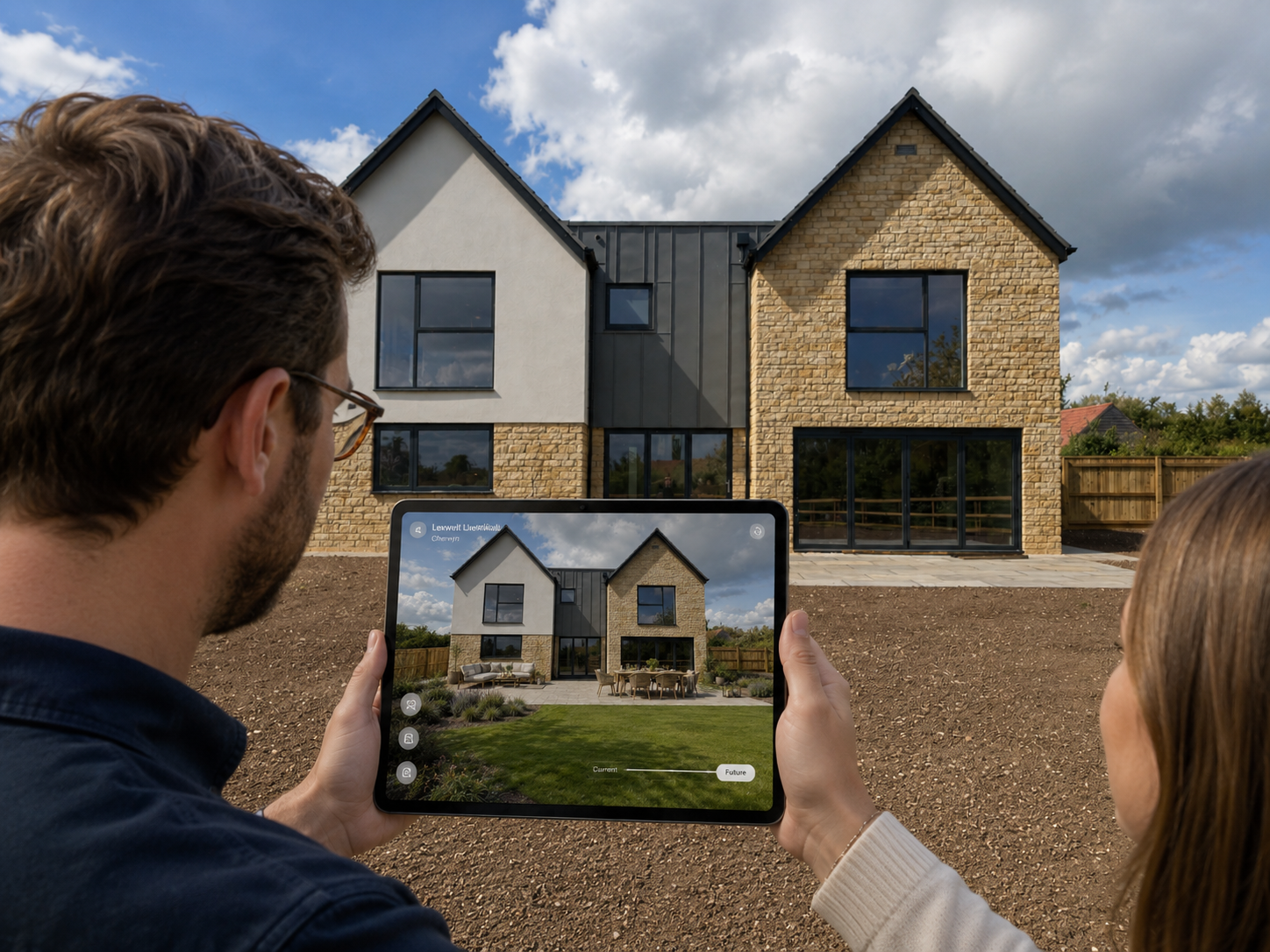
Launch & Sales Activation
Creating the tools, touchpoints and stories that help buyers understand and act.
Launch campaign direction
Sales brochures and lookbooks
Listing copy
Social content
Open evening concepts
Buyer follow-up material
Estate agent briefing packs
Activation roadmaps
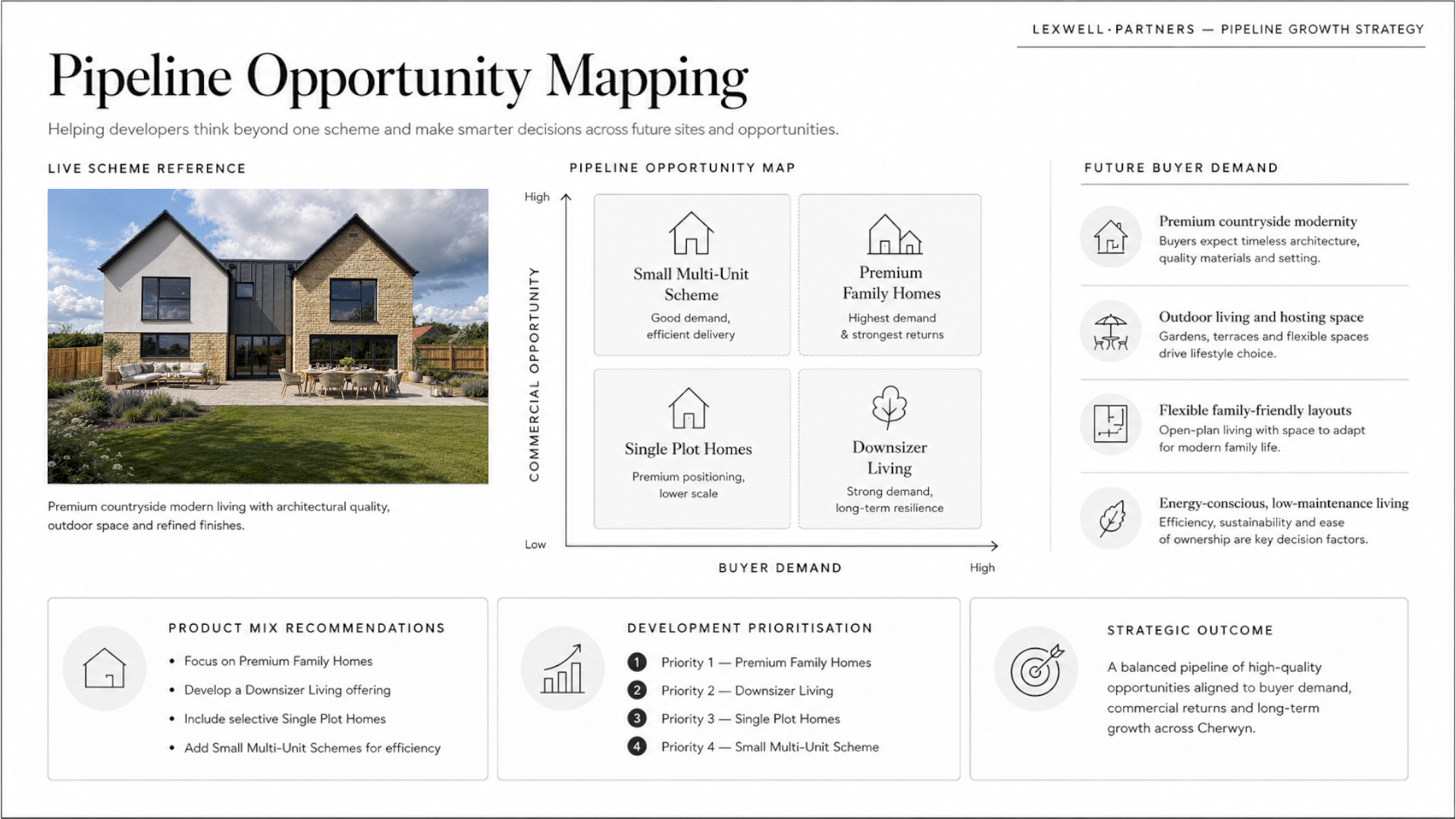
Pipeline Growth Strategy
Helping brands think beyond one scheme and make smarter decisions across future sites
and opportunities.
Pipeline opportunity mapping
Future buyer demand
Product mix recommendations
Site proposition comparison
Development prioritisation
Commercial activation planning
Long-term growth platforms